03. Operation safety
To ensure safety, all oxygen systems must be kept free from oil, grease, and other contaminants, as these substances can spontaneously ignite upon contact with high-pressure oxygen.
Safety is paramount in any environment where oxygen is present at high concentrations. Oxygen enrichment significantly increases the risk of fire and explosion. Although oxygen itself is not flammable, it strongly supports combustion. Materials that are normally nonflammable can ignite easily and burn intensely in oxygen-rich atmospheres.
01. Oxygen safety
Combustible materials in oxygen enriched atmospheres
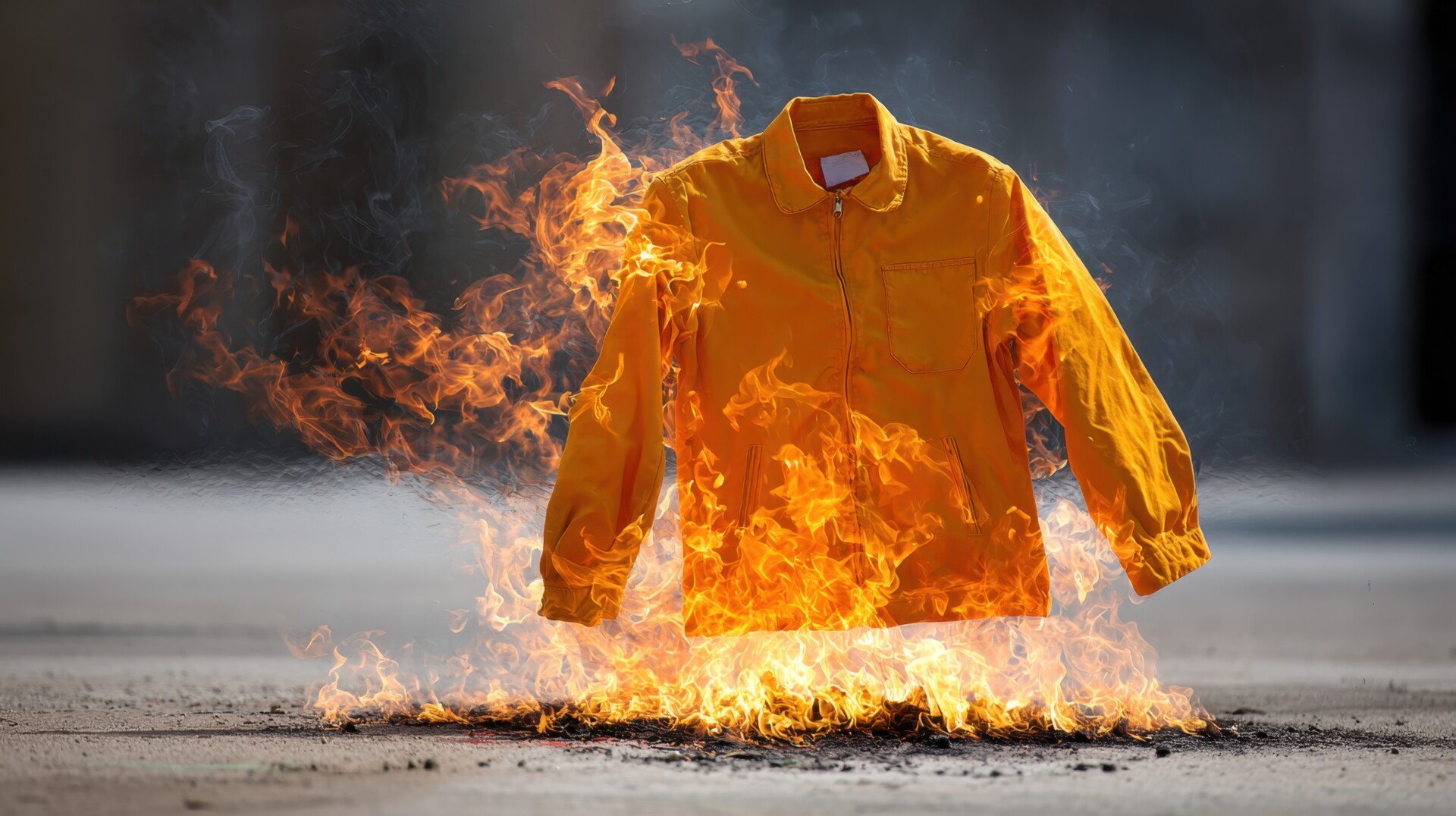
The most common combustible material that affects personnel safety is clothing.
See the graph illustrating how cotton behaves when exposed to higher oxygen concentrations.

A = rate of burning cotton clothing (cm/s)
B = oxygen in atmosphere (%)
| % Oxygen at sea level (atmospheric pressure) | Effects |
| > 23,5 | Increased fire hazard |
| 20,9 | Normal |
| 19,0 | Some adverse physiological effects occur, but they are unnoticeable. |
| 16,0 | Increased pulse and breathing rate. Impaired thinking and attention. Reduced coordination. |
| 14,0 | Abnormal fatigue upon exertion. Emotional upset. Faulty coordination. Poor judgment. |
| 12,5 | Very poor judgment and coordination. Impaired respiration that may cause permanent heart damage. Nausea and vomiting. |
| < 10 | Inability to perform various movements. Loss of consciousness. Convulsions. Death. |

02. Machine safety
Machine safety is a critical component of industrial operations, ensuring that equipment is operated, maintained, and monitored in a manner that prevents accidents and protects personnel. Effective machine safety starts with thoughtful design – incorporating features such as guards, emergency stop systems, interlocks, and clear labeling – to minimize human exposure to potential hazards and create a safer working environment.


|
03. Operation safety To ensure safety, all oxygen systems must be kept free from oil, grease, and other contaminants, as these substances can spontaneously ignite upon contact with high-pressure oxygen.  Installation– Follow the installation instruction and ensure proper piping diameters to limit flow velocity  Cleanliness– Compliance with cleanliness requirements during installation and maintenance  Monitoring– O2 is colorless, odorless, non-toxic, non-flammable gas |